Who Did the Art Work for Hardcore Computing Magazine
The video game mural in the UK at the plow of the 90s was perhaps more confused and fractured than your fading retention can recall, assuming you lot're sometime enough to have lived through it. Home computers like the ZX Spectrum, C64, Amiga and Atari ST were yet the main conduits of interactive entertainment in the majority of homes up and down the country (despite the fact they were often purchased by naive parents with the intention of helping their children with their homework), and the invasion of Japanese consoles from the likes of Nintendo, Sega, NEC and SNK was yet to begun in earnest.
Afterwards years of politely tolerating fair-to-middling home computer ports of cutting-edge coin-op hits, British players were more than ready for truly dedicated gaming hardware which could accurately replicate the kind of intense gameplay seen in local amusement arcades - which is why consoles like the PC Engine and Sega Mega Drive fabricated such a massive touch when they began appearing on the shelves of contained importers towards the end of the 1980s. It was the beginning of a period of console dominance which persists to this very day, and in the United kingdom of great britain and northern ireland there was ane magazine which stood at the vanguard of this gaming revolution: Hateful Machines.
Hateful Machines' origins can exist traced back to ii separate publications from rival publishers: Newsfield's Zzap!64 and EMAP'south Computer & Video Games. The onetime - headquartered in the historic marketplace town of Ludlow and focused on the Commodore 64 home computer - would nowadays a teenage Julian Rignall with his first serious teaching in games journalism, and along with sibling publication Crash challenged the established order past elevating its writers to the status of celebrities. Each staffer had their own set of illustrations courtesy of in-house artist Oliver Frey and were permitted to gleefully stamp their personalities over each and every piece of content they produced, ultimately forging an intimate connectedness with the reader that in turn generated a legion of loyal fans. Perhaps most importantly of all, Newsfield employed genuine gamers direct out of school. Rignall was a case in signal; prior to joining Newsfield and Zzap!64, his biggest merits to fame was becoming the United kingdom of great britain and northern ireland Video Arcade Game champion in 1983 - an award bestowed by CVG itself.
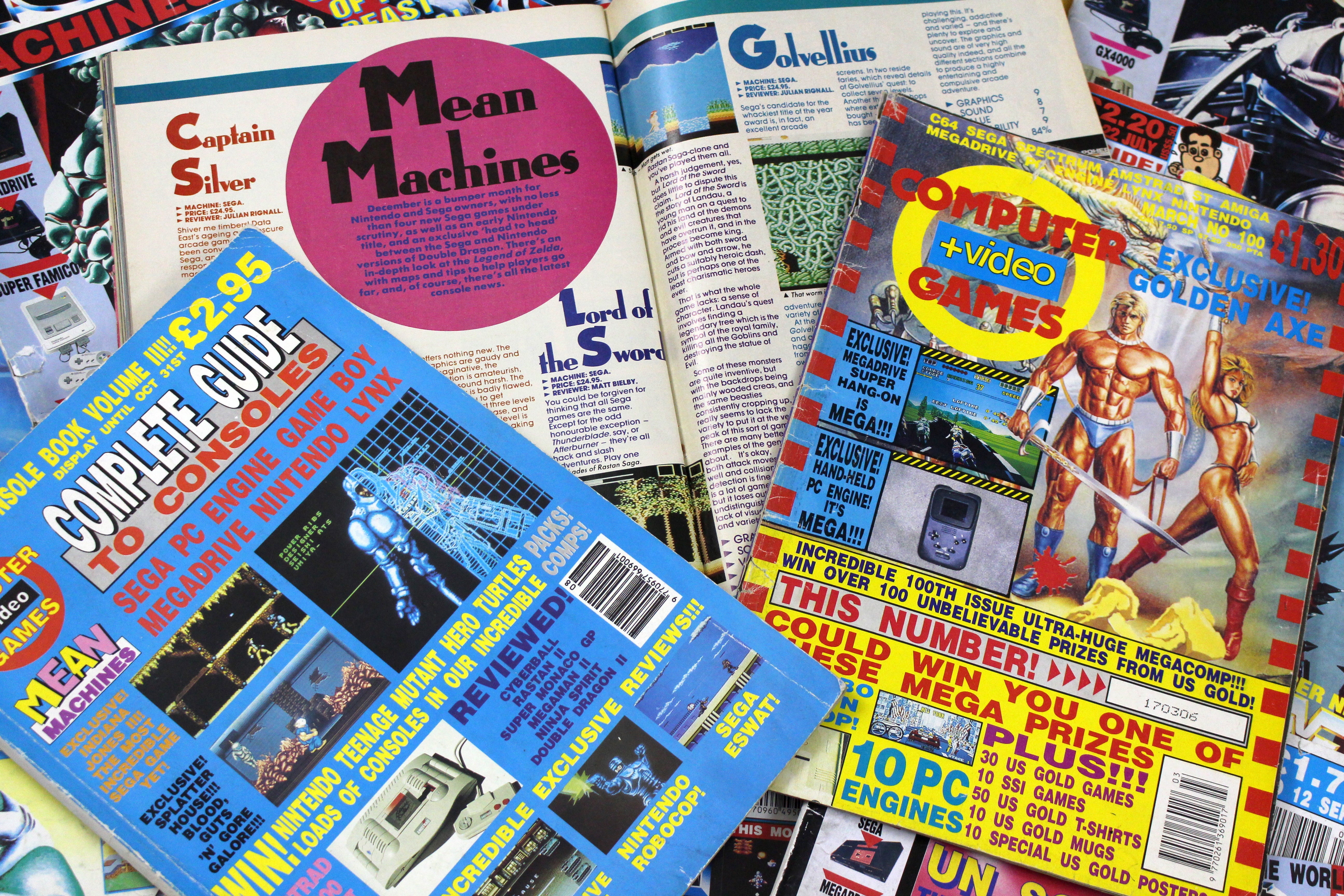
Newsfield's pokey Ludlow function was the perfect hotbed for a revolution in the manner in which the specialist media covered video games, just this dear affair couldn't final forever. "After putting our hearts and souls into Zzap!64 for several years, Steve Jarratt and I got fed upwards with Newsfield's drama and politics and left the company to work together as a freelance team," Rignall explains. "We secured a retainer with EMAP and produced articles for CVG and Commodore User for several months. At that betoken, Eugene Lacey - so-editor of CVG - tried to become me to join the magazine as a total-time member of the editorial team, and although I initially said no, he eventually made me an offer I couldn't refuse. Information technology was a really, really tough decision, and Steve was understandably livid at me for breaking our partnership, but I joined CVG every bit Deputy Editor in the autumn of 1988." On a side note, if the proper noun Steve Jarratt seems familiar, it's considering he went on to exist the launch editor of Full!, Border and Official Nintendo Mag at Future Publishing.
The publication Rignall joined was the United kingdom'due south leading multi-format games mag, but information technology was undergoing seismic change which reflected the turmoil of the global gaming industry. After covering home computers for the all-time part of a decade, CVG was slowly but surely turning its attention to the new moving ridge of Japanese console hardware which was arriving on British shores. The Nintendo Entertainment System and Sega Master System were the first to detect fame, simply these 8-fleck platforms were well-nigh to exist superseded by a new generation of powerful 16-fleck challengers. To adapt these new pieces of hardware the determination was made to requite them their own section at the back of the magazine. "The very first Mean Machines column was published in the October 1987 issue," explains Rignall. "It was originally written by freelancer Tony Takoushi and covered console and import games - which was quite frontward-thinking for its time. I ended up taking over the column in early 1989 subsequently I'd been at CVG for a few months. At that signal the console marketplace was really get-go to kicking off, and I was extremely excited nigh the Mega Bulldoze and the PC Engine - both were manna from gaming heaven as far as I was concerned."
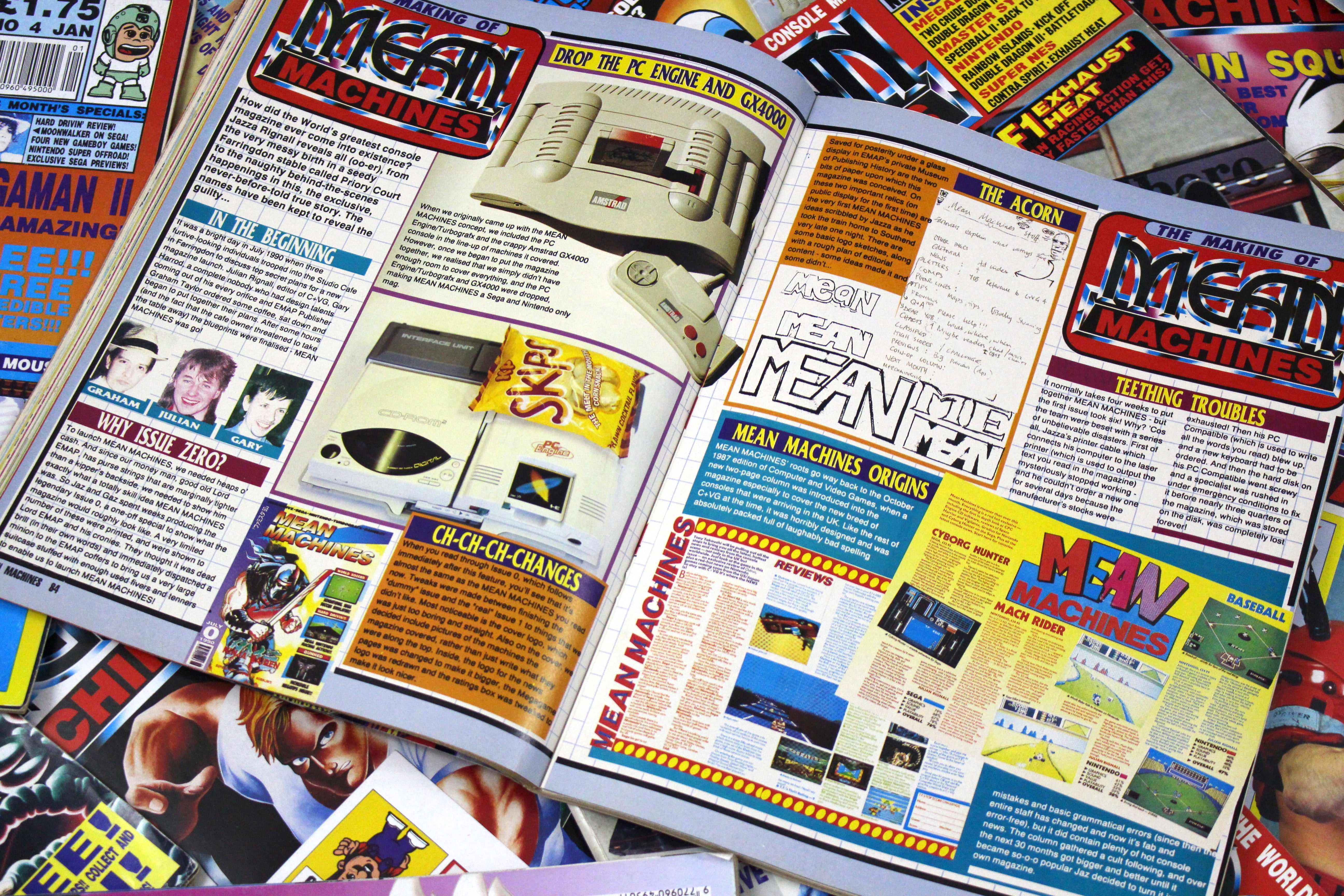
But a few pages at the dorsum of a mag which was withal primarily focused on dwelling house computers was never going to exist enough to contain this explosion of thoroughbred gaming goodness, and Rignall cannily sensed that the time was right for a publication which could lavish its full attention to these thrilling new systems. "I pitched CVG publisher Graham Taylor the idea of potentially spinning off Hateful Machines equally a solo publication multiple times during the bound and summer of 1990. He kept on saying no, merely I somewhen wore him downwards like water on stone. At that place were signs everywhere that it could work - the import market was booming, the Mean Machines column was getting tons of its own mail then reader interest was evidently very loftier, we'd produced several 'Complete Guide to Consoles' magazines that had sold well, and ultimately there was a huge gap in the market. Few, if whatever magazines were actually covering consoles, and to me they were the most exciting aspect of gaming - a market that was just waiting to explode. I call back talking to Graham nearly information technology 1 afternoon during the peak of summer, and he finally said okay, and gave me the upkeep to produce a dummy mag - the legendary 'Outcome Nil'. That focus-tested well, and we launched the magazine proper in October of 1990."
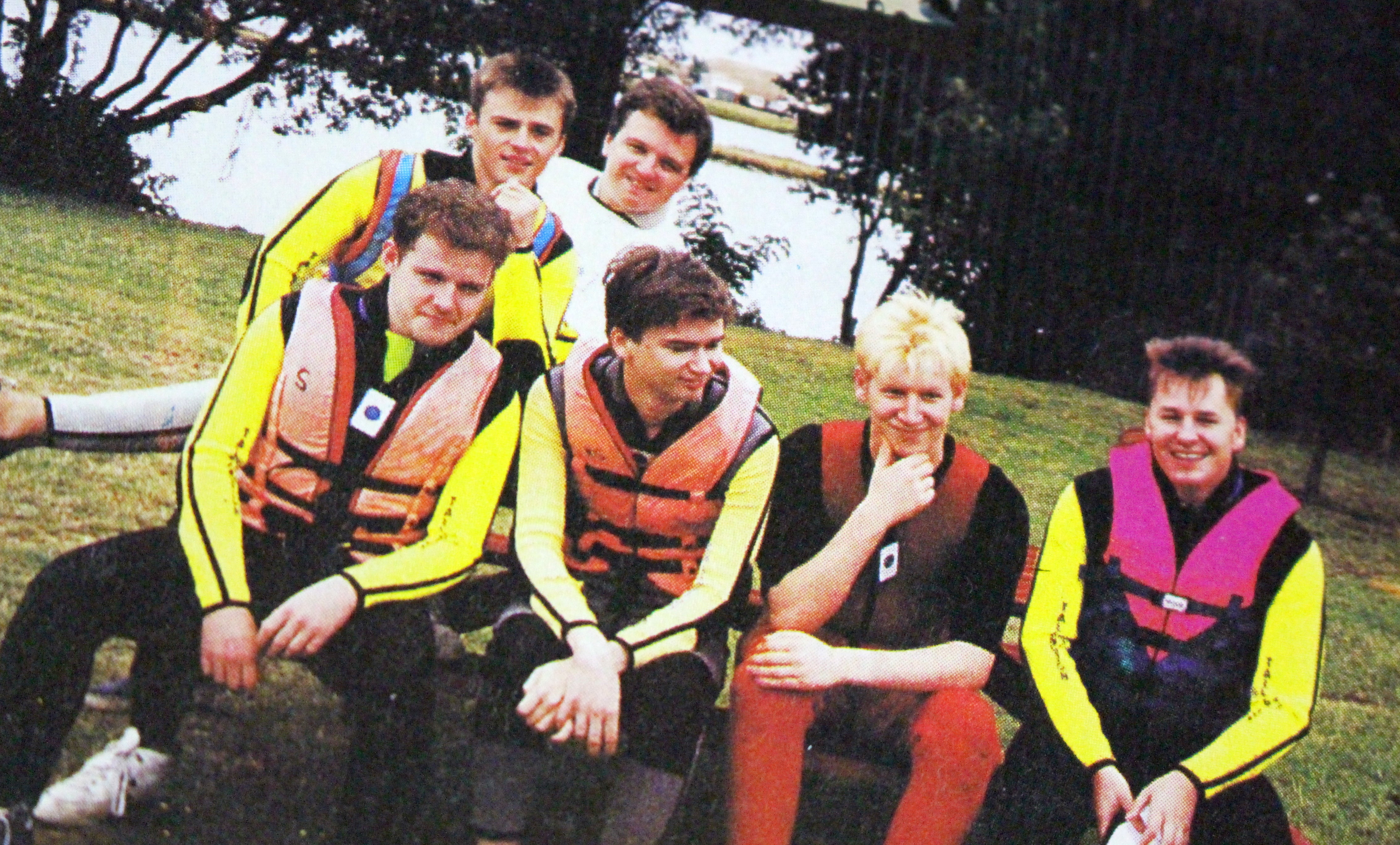
To begin with, the core Mean Machines team consisted of Rignall and fellow staff writer Matt Regan, with Gary Harrod and Oz Browne on fine art and design duties. Richard Leadbetter - whose proper name (and indeed, confront) will be instantly familiar to those of you who keenly follow Digital Foundry'southward coverage on this very site - would join the ranks later, while fellow CVG staffer Paul Glancey, another former Zzap!64 and Newsfield veteran, contributed reviews equally the workload grew. The dawn of the new decade saw the NES and Chief Arrangement duking it out for dominance of the living room while the Nintendo Game Boy created a new awareness for the potential of portable gaming; all three would feature in Mean Machines. Virgin Mastertronic was almost to launch Sega's 16-fleck Mega Bulldoze officially in the UK, making it another obvious inclusion for coverage in the mag. Notwithstanding, despite the fact that Rignall and the residual of the CVG team had passionately championed the import-merely PC Engine and had included it in the aforementioned Outcome Naught, that detail pint-sized console didn't make the last cut. In a decision which is piece of cake to criticise with the do good of retrospect, the recently-released Amstrad GX4000 took its identify.
"The GX4000 was, how can I put it politely... unfortunate," says Leadbetter. "Ultimately, I think it chop-chop became clear that it was but not worth our attending." Rignall reveals that the inclusion of Alan Saccharide's latest disasterpiece was largely to practice with more mundane matters; equally a console which was officially available in the UK, it had the potential to draw in advertising revenue, whereas the PC Engine was nonetheless only bachelor on import. "The GX4000 was a publisher matter - Graham wanted it on the cover because he felt that it might lure in a few advertisers. Once it was articulate that it was a complete and utter failure, it was replaced with the infinitely more than exciting Super Famicom, which of grade became the SNES in the west. The Neo Geo was considered for inclusion but in the end we felt that it was a little too niche to be emblazoned on the front of the mag, despite existence very cool."
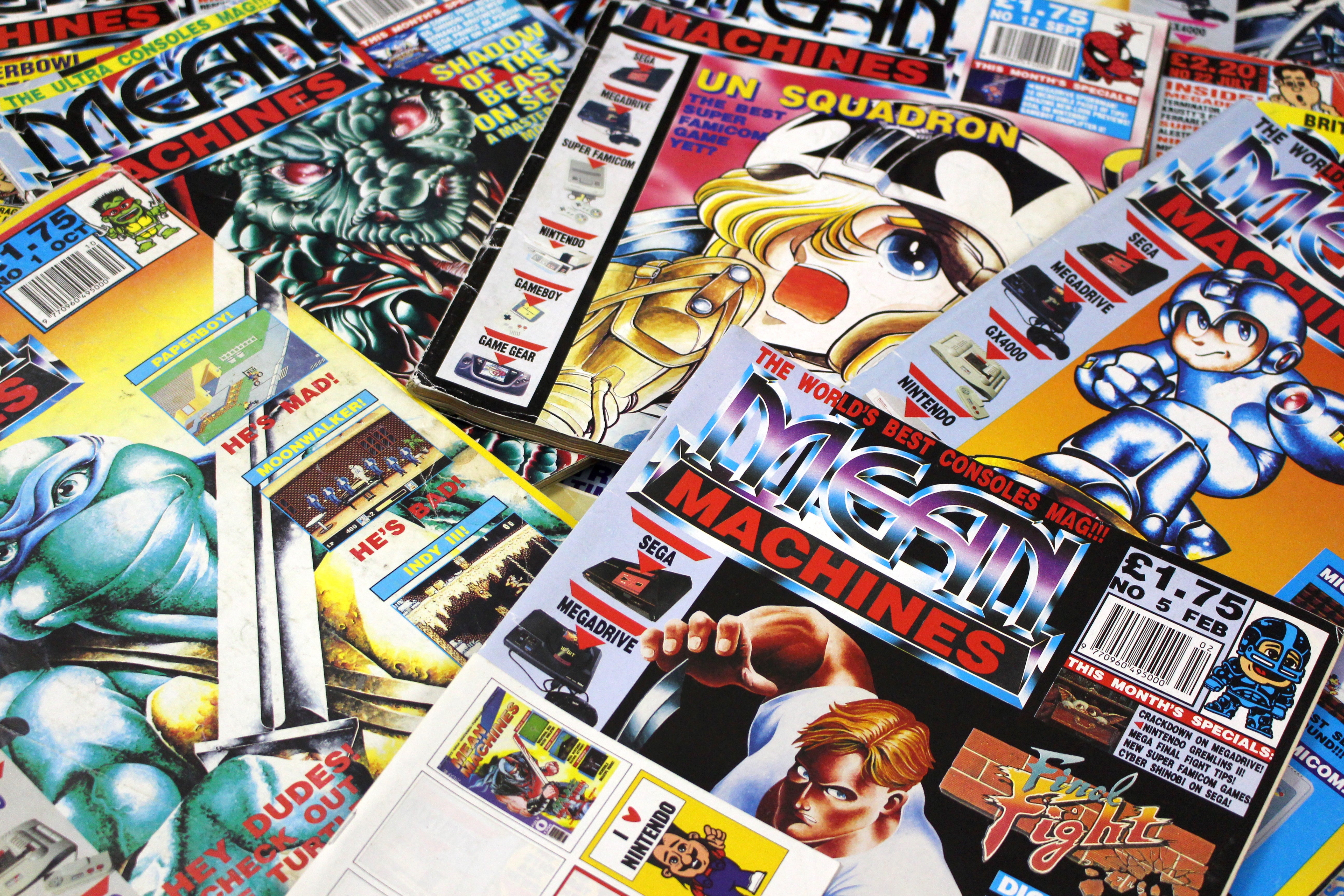
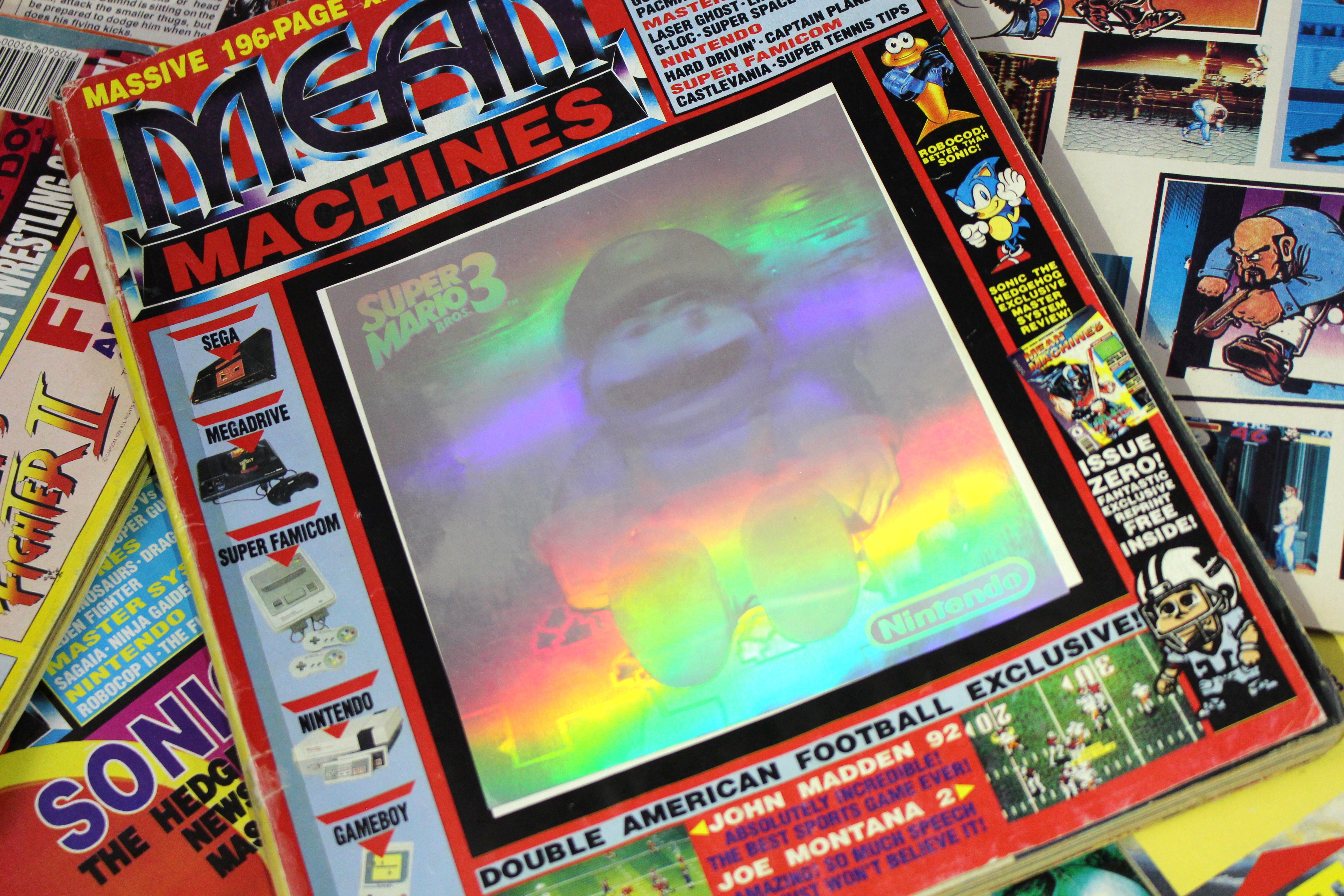
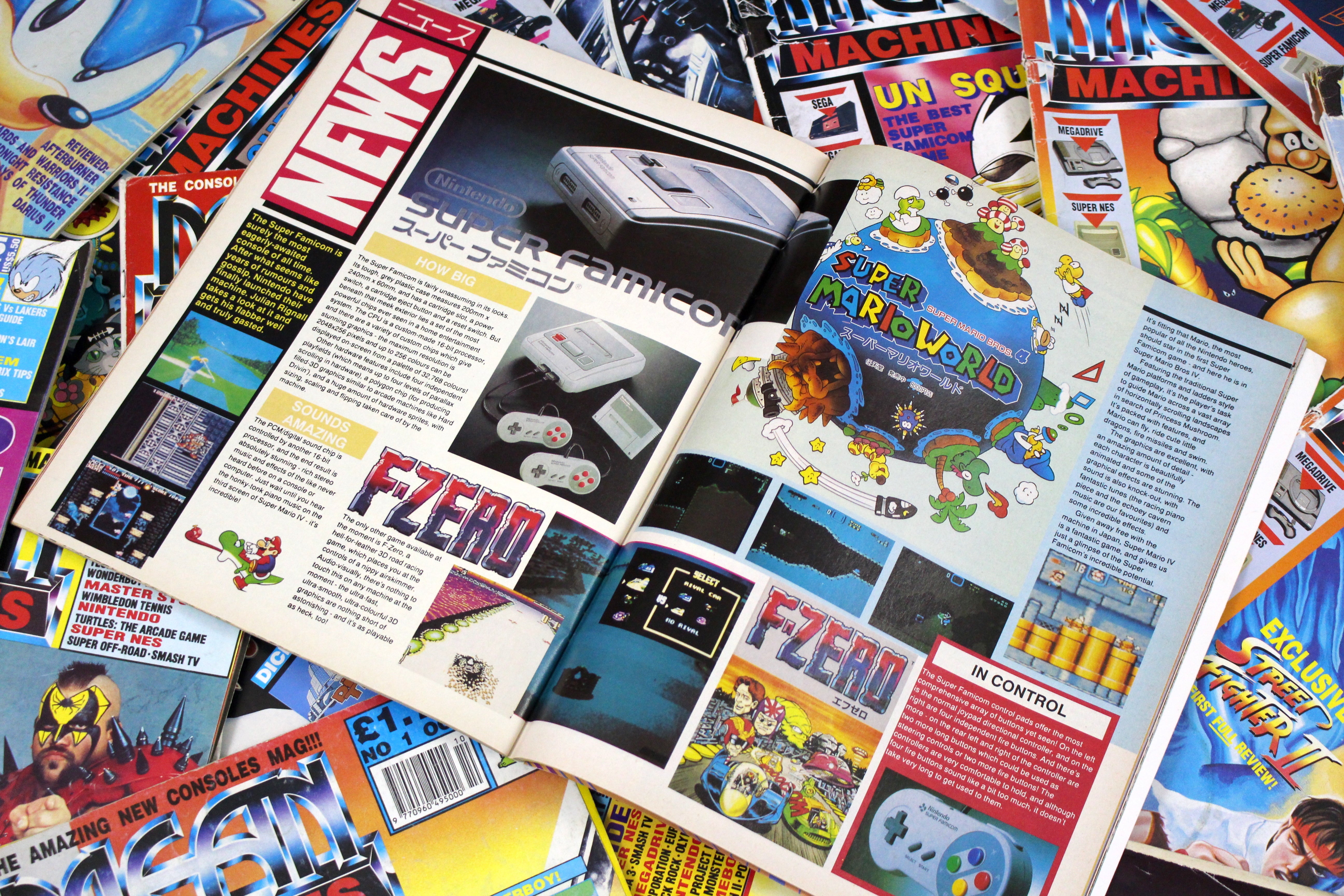
The timing of the first upshot of Mean Machines was fortuitous to say the least. Despite being a distant 2nd to Sega in the UK market, Nintendo was gaining traction thanks to the fact that it produced the just home console with a Teenage Mutant Ninja (or Hero, if you prefer) Turtles game, and that was wisely selected every bit the footing for the debut issue'south embrace epitome, with in-house artist Harrod creating an entirely bespoke piece of artwork. Harrod - these days employed as Artistic Director at Square Enix Europe - would fill up a role like to that of Newsfield's Oliver Frey; his fine art imbued the publication with its own unique identity.
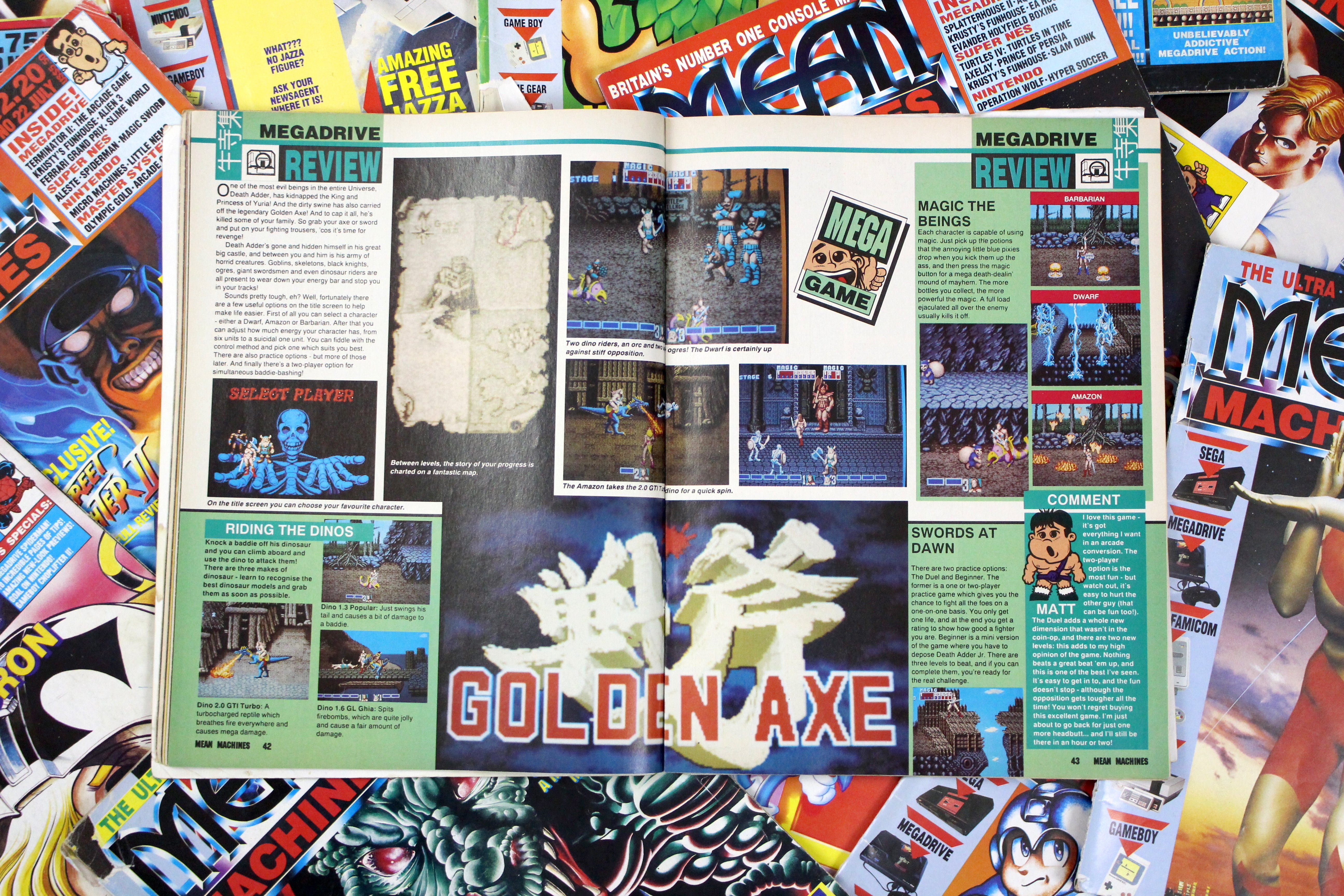
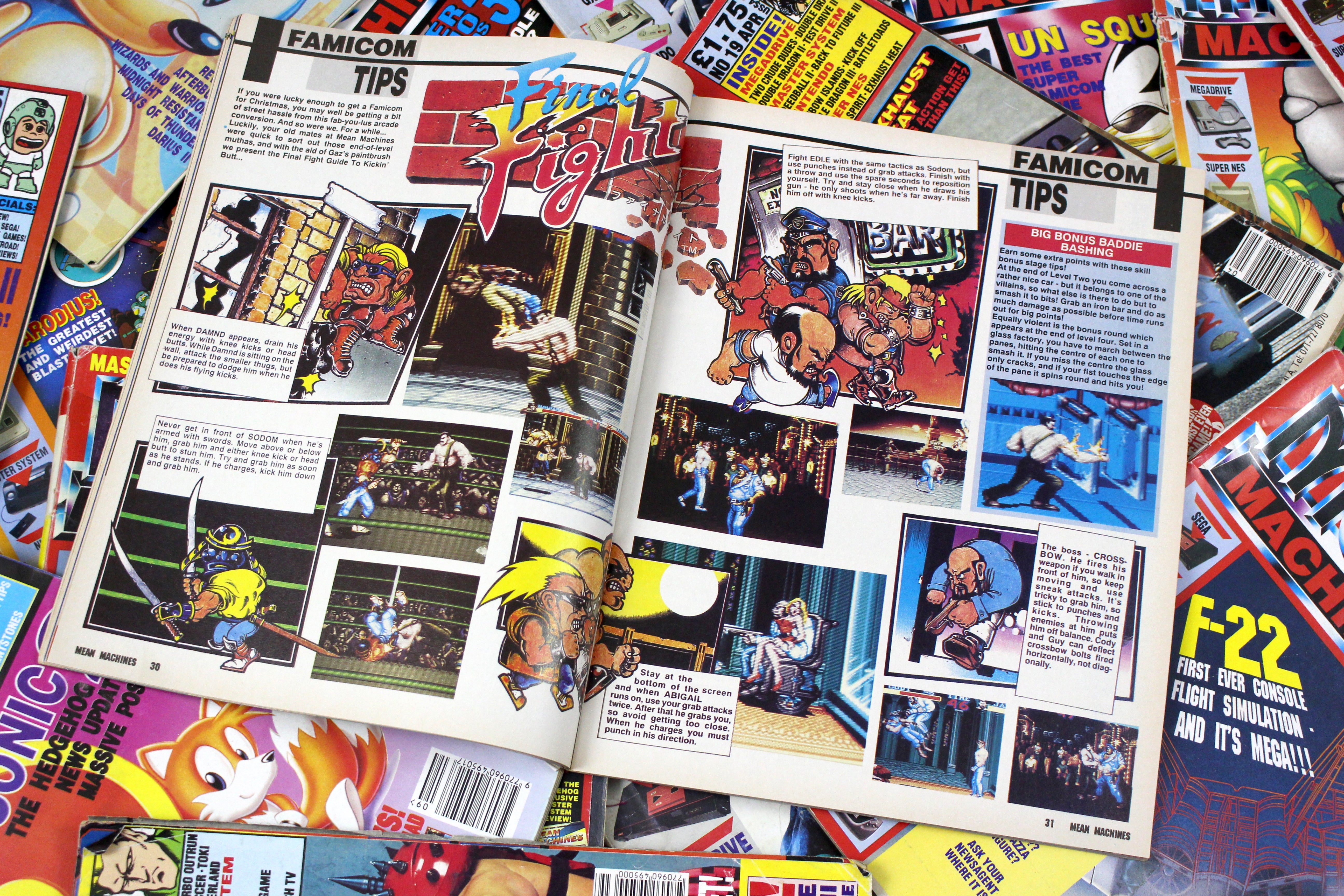
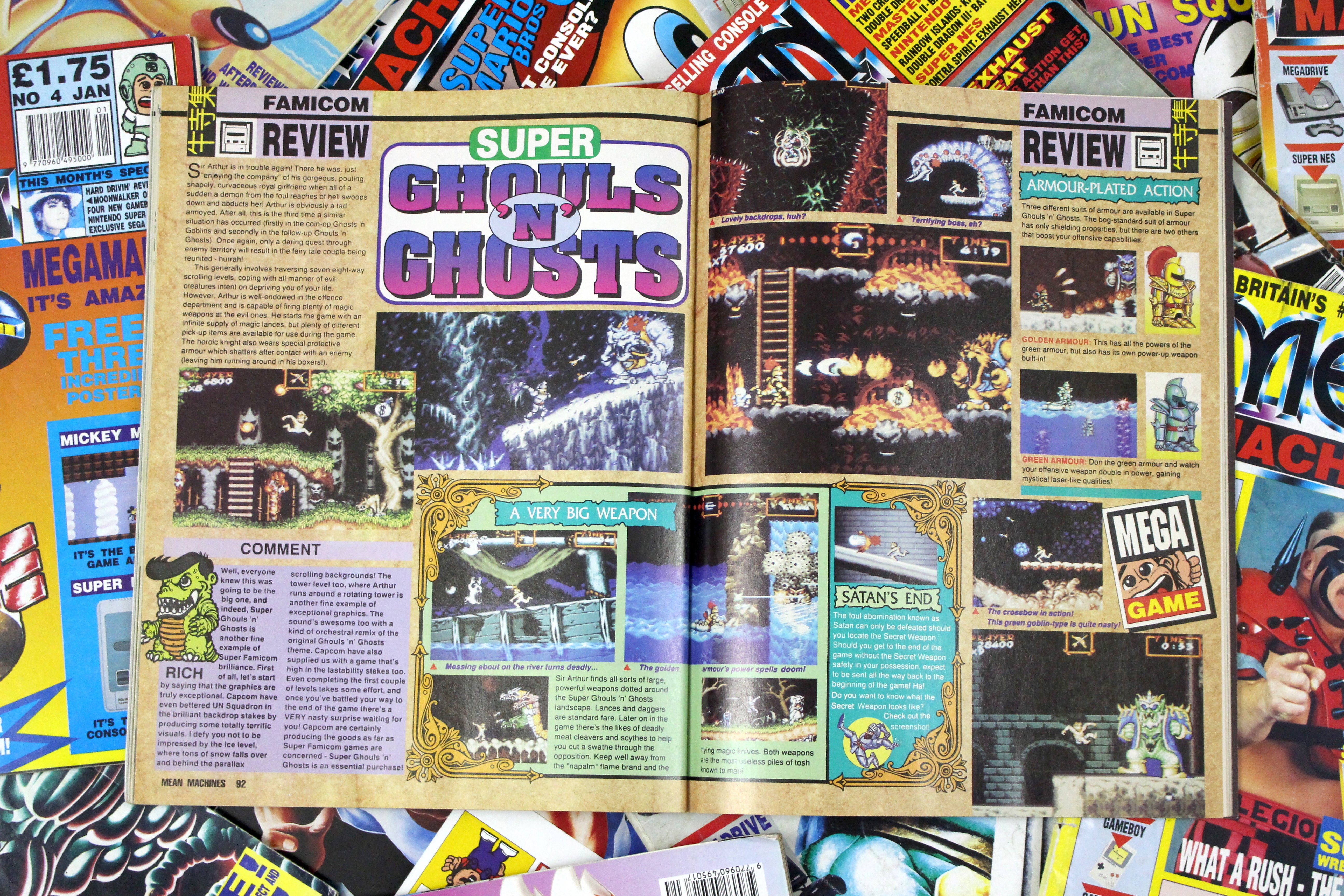
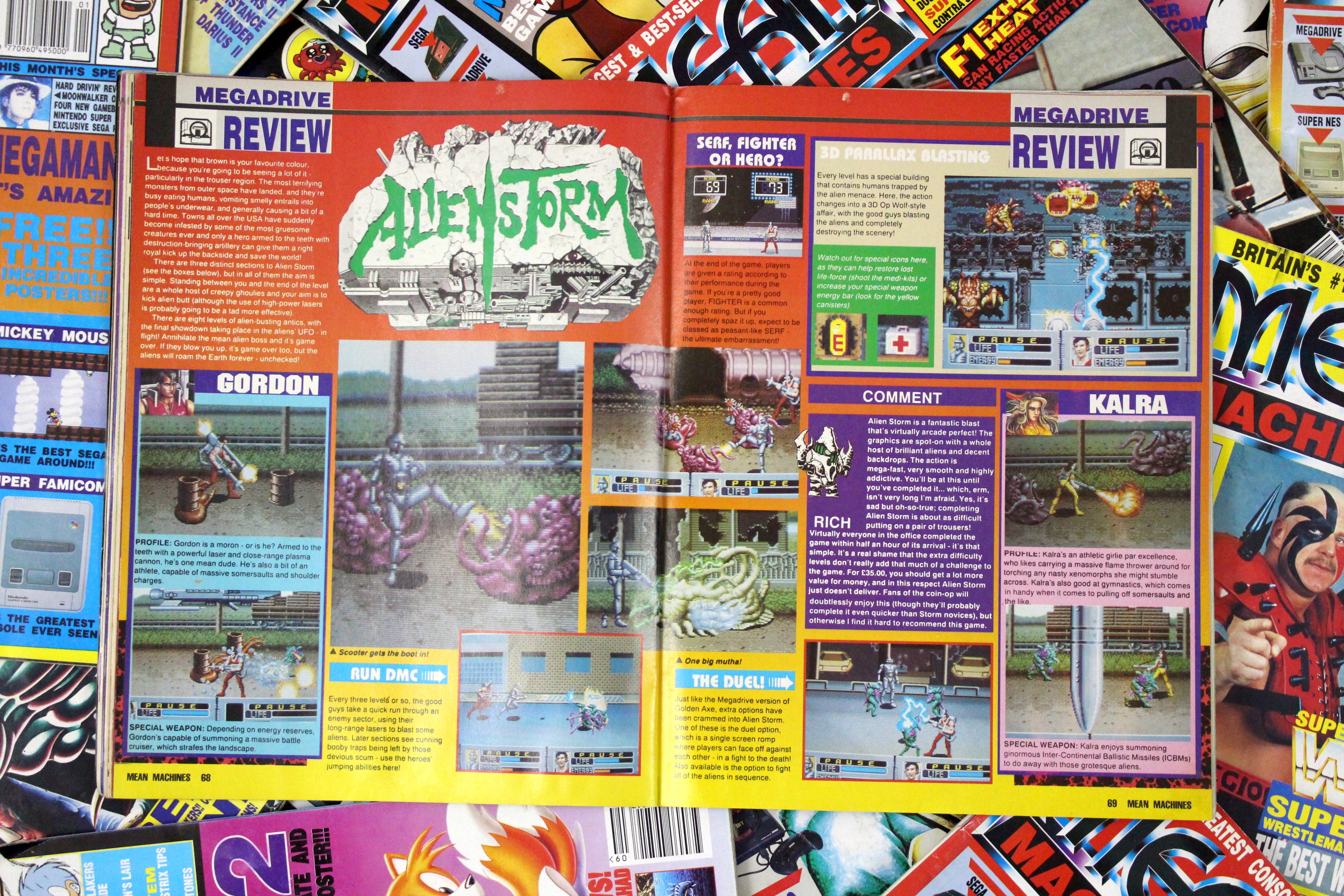
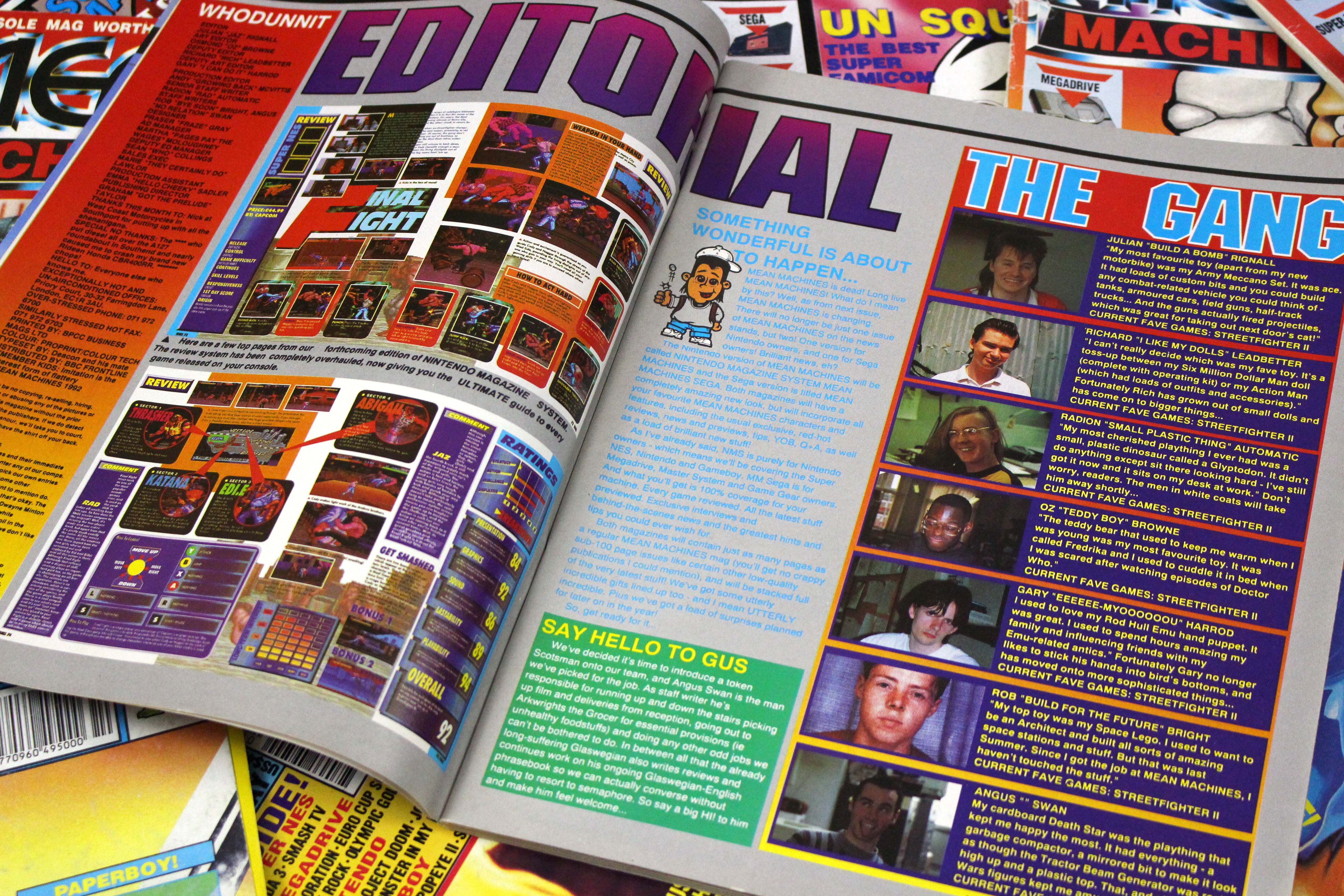
"I call up Gary's work was hugely important in establishing Hateful Machines' visual fashion," says Rignall. "He was heavily influenced by manga, and that Japanese art style worked perfectly with all the import games we were roofing at the time. To me, the most iconic part of the mag were the little illustrations of us that we used for the reviews. They really gave Mean Machines a unique look that no other British mag had at the time. The other matter to consider is that we worked very hard to break Mean Machines' content upwards into bite-sized chunks. We didn't desire massive walls of text, and instead went the opposite route, breaking down reviews into a series of extended captions and box-outs, with plenty of pictures and information. That gave Mean Machines a very busy, dynamic look, and made the magazine experience like there was a ton of content on each page."
In the days before the cyberspace, physical mail was the virtually obvious way for readers to ask questions, supply feedback and generally connect with the people who produced the magazine, and the Mean Machines team actively encouraged this procedure from the very commencement. "We wanted Hateful Machines to exist every bit interactive equally possible, so that it felt similar a community of gamers," adds Rignall. "That'south why we went to such lengths to make sure that in that location were always a myriad of means to contribute to the magazine as a reader. We'd try to make competitions creatively entertaining, and asked people to ship in all sorts of stuff, from pics of crashed cars to bizarre photos of themselves and their pets. I think it helped make the mag feel down to globe, irreverent, and funny - we admittedly didn't desire to be a publication that kept everyone at arm'southward length and spoke down from on high." It worked. "There was literally a new big grayness sack of mail arriving every solar day which someone - me, specifically - would have to sort out," says Leadbetter.
The letters page was overseen past the fictional Hateful Yob, who quickly became the magazine's mascot. This section of the magazine saw insults existence dished out with side-splitting regularity, only who on the team was responsible for these witty ripostes? "That would exist me!" chuckles Rignall. "I actually started answering the letters in CVG under the Yob pseudonym to spice up what was otherwise a pretty humdrum page. I then took that character over to Mean Machines and amped up the manic rhetoric by several degrees. I tried to observe a balance betwixt existence funny, while not existence overtly mean - which I didn't e'er get right - just I do think it was a pretty amusing read for the most part, even if I say then myself. I basically just riffed on what the readers were sending in. If they were being light-headed, combative, or asking stupid questions, I'd reply in kind, but if they were serious, I'd endeavour to come upwardly with a sensible answer."
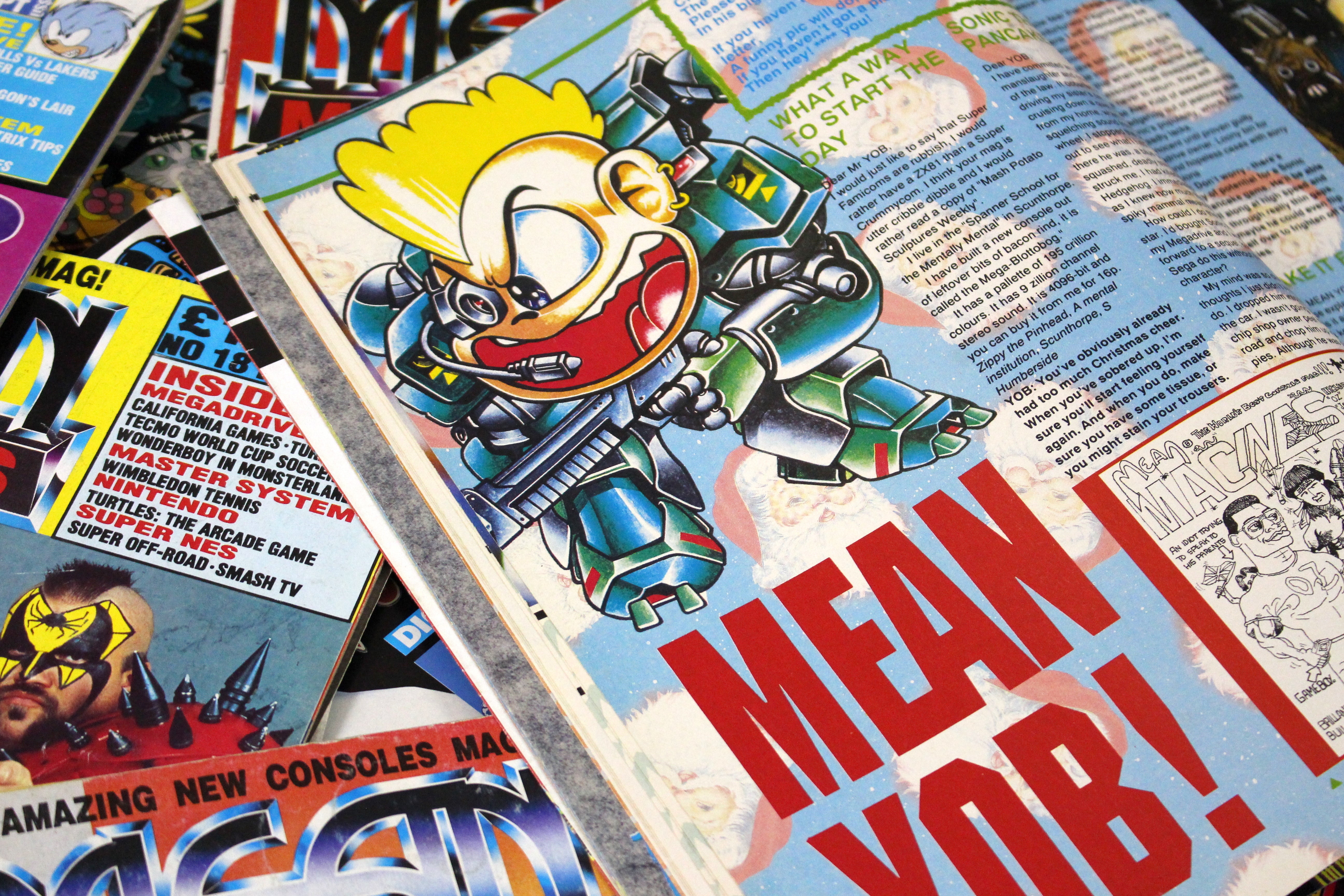
The capacity for causing offence was obvious, but readers saw it every bit a badge of honour to exist insulted by Mean Yob, as did the staff themselves. "Permit'southward not forget that Jaz upped the ante there by specifically asking readers to send in photos of themselves so that he could insult them," points out Leadbetter. "Good old 'Insult Corner' - I still tin't believe people sent in pics," Rignall adds. "Although I have a sneaking suspicion that what they were actually doing is sending in pictures of their friends. Either fashion, information technology was highly entertaining, and readers seemed to beloved information technology. I tin can't believe some of the jokes and double entendres - and indeed single entendres - we used to write, but for the most role nosotros got abroad with information technology. Nosotros'd occasionally get complaints from parents, but fortunately they were rare, and we always just laughed about it. Mean Machines was basically a reflection of how we all talked and joked with i another - a natural editorial style that evolved out of our general role interactions and barrack."
Connecting with the readers in this fashion often had unexpected benefits. When an intriguing fellow who shared his name with a popular brand of washing powder submitted an agreeable comic strip detailing the fictional exploits of the Hateful Machines team, it was printed in the magazine. "I'd been sending comic strips into Mean Machines mostly to try and get free games as I didn't have a lot of money, but likewise wondering if I could somehow one day brand a become of cartooning," recalls Eddy Lawrence, better known to Mean Machines readers as Radion Automatic. "So one 24-hour interval Jaz got in touch to say they didn't demand a cartoonist, equally they already had Gary Harrod, who can actually draw (fair point), simply they were looking for a new staff writer, and would I be interested? Spoiler alert: I was indeed interested. I came down to London for an interview and Jaz kept me waiting for near two hours while I cacked myself, worrying there was going to be a gaming proficiency examination. In the cease, he asked me about two questions, warned me the money wasn't great and then offered me the chore. Information technology was astonishing, and I have to say quite a leap of religion on Jaz'south office. To be honest, I don't know if I've always properly thanked Jaz for taking a chance on me. Him and Rich taught me so much, and it completely transformed my life, and led to so many other crawly experiences. As time goes on, information technology actually gets harder for me to believe information technology ever happened."
After crossing the separate between reader and staff writer, Lawrence began to appreciate what a massive bear on the magazine's fanbase had on the evolution and success of Hateful Machines. "The readers basically gave us permission to be ourselves. A lot of the humor in the mags came from either in-jokes in the office that were taken to increasingly illogical conclusions - such equally Gary existence a vagrant and Rich'southward 'phone box frolics' - or simply the states being really snarky, or losing our minds. So it was a large confidence boost to know that the readers got it, and liked it. At that place were a couple of other mags that you could see were trying really difficult to be 'down with the kids, yeah?' Information technology was really transparent, like having a Christian youth group do a 'special assembly' with skits about not smoking, or not denying the Holy Trinity. We never had to 2nd-guess the readers, because they were an intrinsic part of the magazine. It went both means, of course. The outset outcome I worked on gave away a gratis plastic model of Jaz on the comprehend. I can't retrieve of another mag ever where a figurine of the editor would have been seen as an really desirable gratis gift."
Maybe the most famous case of the readers taking a throwaway Mean Machines joke and running with it is the fable of Dwayne Milton of Due west Wormwood. "There's not much of a story behind Dwayne unfortunately, he was only a product of my rather strange sense of humour," admits Rignall. "While compiling the masthead for Hateful Machines outcome one very late one night, I thought it'd be fun to spice it up past sprinkling in a few irreverent jokes. As I wrote out the competition rules, I idea information technology would exist entertaining to take someone banned from inbound them for a really arbitrary reason, and made upwardly Dwayne Minton on the spot. That then adult into an ongoing in-joke where we'd mention him every month." Readers would write letters chronicling Dwayne'southward shambling exploits and he was even featured in pieces of reader artwork; a largely aimless joke concocted during the daze of a late-dark piece of work session had been given life.
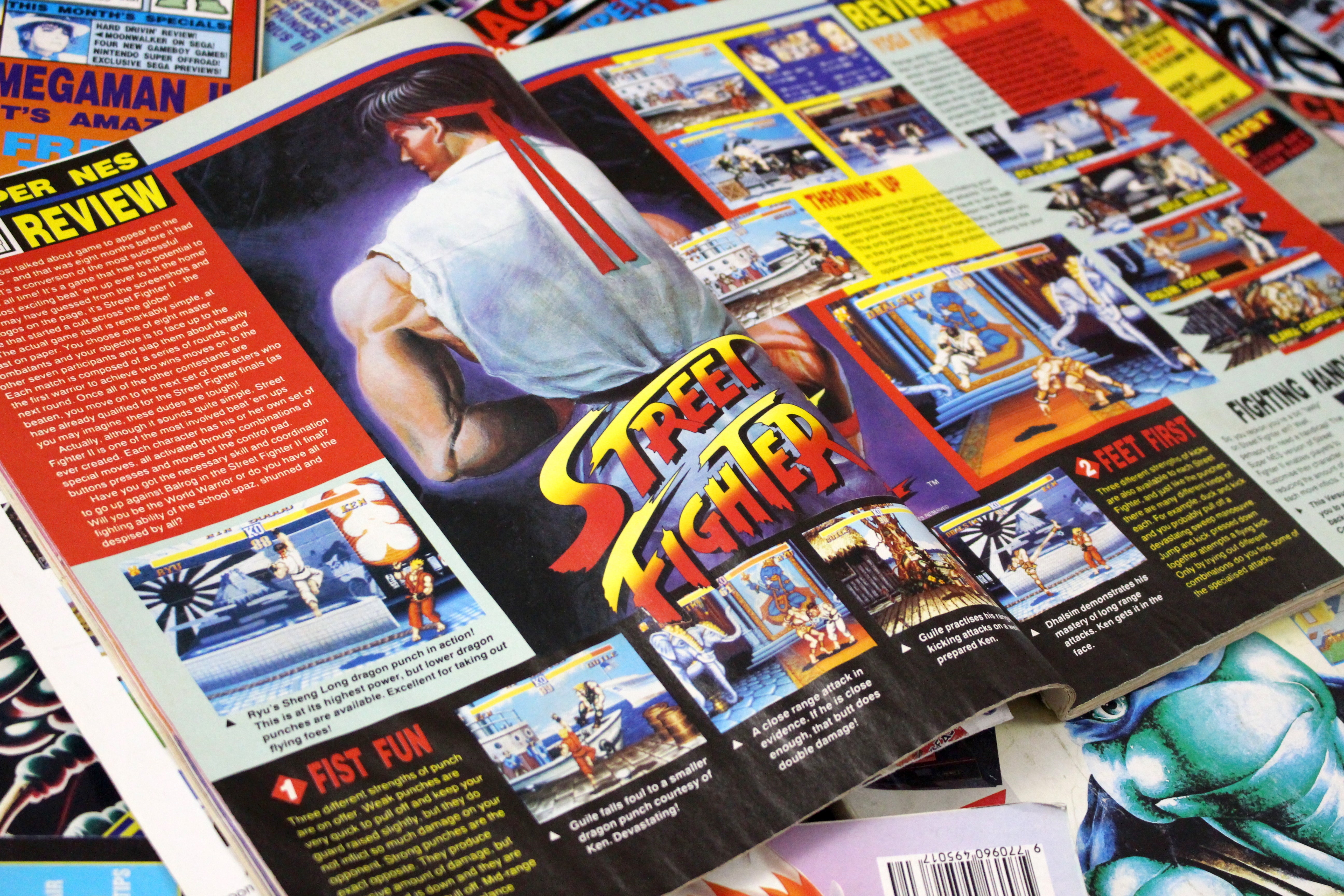
Such humour made the process of creating each upshot of Mean Machines more bearable for the team. "The get-go week was e'er a comparative doss for several reasons," explains Lawrence. "Namely, you'd be in recovery from the punishing onslaught of the last press week. Information technology was similar we didn't realise that deadlines aren't like earthquakes - 'Oh, we had one of those last week, it'll never happen again'. So at that place'd exist countless Mario Kart and Street Fighter 2 tournaments, and you'd spend a lot of time either catching up on big games from the last month that you lot'd missed, or really getting into playing your lead reviews for that upshot. You'd also spend a lot of fourth dimension merely watching people play stuff, specially the big games, hoping you could go a go when the reviewer went for a wee. The side by side two weeks were more like having a proper task in terms of knuckling down. The final week was, without fail, a full clusterfuck. You'd make it early (or in my case, marginally less late), stay until perhaps eleven, and perhaps be in at the weekend as well, trying to take hold of up on all the stuff you lot should accept done in the get-go week, and swearing that you'd definitely do that next month."
"It was a really odd manner to work, but it has a tempo that you eventually go used to," adds Rignall. "Mean Machines was a complex mag to put together, with a quite sophisticated page blueprint that needed tons of pictures, captions, and sundry other info. That made it very labour intensive, especially for the fine art team, and we were e'er making final-second changes when we spotted mistakes and pictures in the wrong identify. Most months, nosotros used a courier to ferry the final pages to the printers at some ungodly hour of the morn and so we could hit the printing deadline." Lawrence likewise points out that the squad's dedication to creating the best content possible contributed to the often fraught nature of the monthly production schedule. "The reviewing procedure was very time-intensive, even without doing screenshots. I'm very proud that nosotros never wrote rush reviews. 1 of the major strengths of Mean Machines was definitely its disquisitional authority. I think the readers could definitely tell that we all knew what we were on about. So every game got the attention it deserved, unless it immediately apparent that it was a shambling mockery of a parodic travesty of a farcical charade. Nosotros'd agonise about the percentages, especially once you were scoring something in the 80/ninety per cents, and there would be heated rows well-nigh some games. Information technology wasn't something we could just churn out."
Of form, being surrounded by video games on a daily footing presented its ain bug when it came to workflow. "Permit's not talk about the weeks we'd spend playing Super Mario Kart, or when the Street Fighter 2 arcade machine turned upward," laughs Leadbetter. "Literally no work would be done." Rignall smiles at the recollection. "Nosotros used to accept John Madden Football leagues, likewise. Everyone worked incredibly hard, but somehow we always managed to find time for enough of gaming. For me, playing a few rounds of Street Fighter two really helped accident off steam when things were getting stressful." As if any more distractions were needed, there was always the threat of an unscheduled glory visit. "I remember Brian and Terry from East 17 doing their best 'Beavis & Butt-Head' laugh at a Take That poster Gary had stuck up behind his desk-bound, which he'd graffitied over and so it looked similar they were having an orgy, complete with a bottle of champagne relabelled as 'cock lube'," recalls Lawrence. "They were in the office for a Street Fighter tournament. Their management had rung up maxim they were big fans and wanted to be in the magazine. I remember going to the smoking room with Brian and asking him how long he'd been reading Mean Machines, and him laughing and maxim 'Near five minutes'. Nosotros ended up spending almost of the day sitting in the pub with them while they talked about smoking weed. They were great."
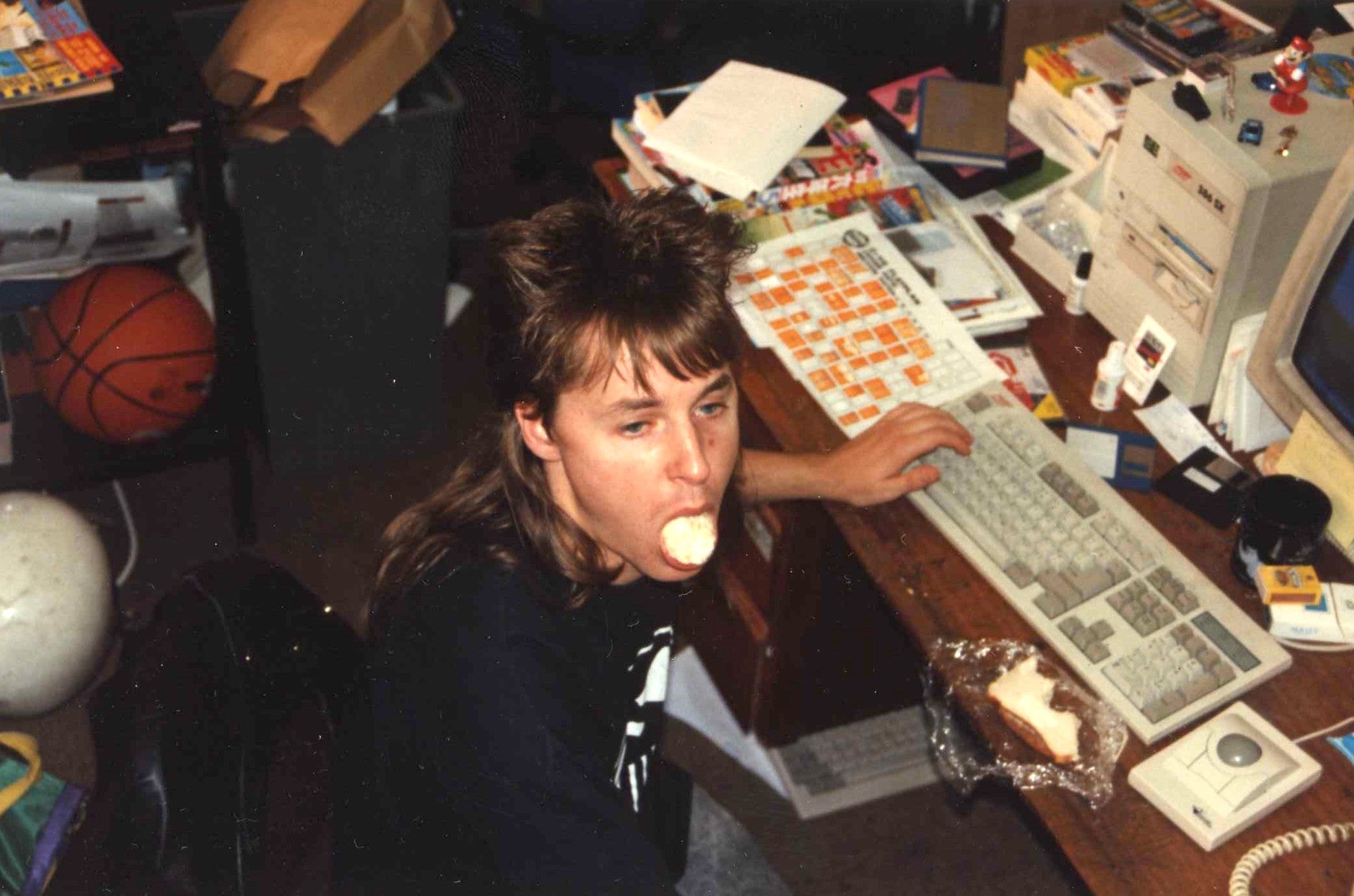
Set in the humming heart of London, EMAP's Priory Court offices were the base for the company's magazines, including CVG and Mean Machines. The ageing building - which was a stone'south throw away from Farringdon Station - holds some particularly grim memories for those who dutifully slaved within its walls. "It hadn't been decorated in years and at that place was no air-conditioning and then it stank to high heaven, particularly in the summer when certain staff members' lack of personal hygiene became brutally obvious," winces Leadbetter. "Piles of junk and magazines everywhere, no real evidence that nosotros had cleaners of any description. Oh aye, and actually illegal by today'south standards as quite a few people smoked in the office."
"We had fruit flies effectually the Terence Piper vending machine, which served something called coffee," says Rochdale-born Paul Davies, who would bring together EMAP in 1992. "The cleaners would leave notes saying 'please go on this expanse make clean' which I institute disruptive. Somebody in one case fabricated an awful mess in i of the downstairs toilets, and to this day nobody knows who that was. Somebody peed on the floor of the CVG toilet. This might've been me on a deadline day when all I could see was kaleidoscope patterns." Despite the potential for health and safety violations, Rignall admits that he still has fond memories of Priory Court. "The office was pretty damn rank - specially the photography and game room. Lots of mystery stains on the carpet, and rubbish everywhere. Every so often we'd take a cleanup, but it was pretty tough keeping the office in whatever kind of order because we were working so hard all the time, and received bags of mail service every day. Withal, even though information technology was a bit of a pig sty, information technology was a groovy place to work, assuming you could put up with the death metallic and gangsta rap that Gary Harrod endlessly played on his ghetto blaster."
Priory Court was dirty in tone, as well. "Aside from my feet, the filthiest thing well-nigh Priory Court was the minds of the people who worked in that location," laughs Lawrence. "That identify was like the Renaissance, Left Bank and Vietnam of vulgarity, all rolled into i. It was never mean-spirited, merely nosotros but used to sit down in that location utterly ripping the piss out of each other in the most obscene ways. Pretty much every interaction betwixt united states would have been a sackable offence in any other workplace. Jokes about fisting each others' mums were then frequent that they were ultimately reduced to a universally-recognised female parent-fisting noise, that was somehow an acceptable response to pretty much whatever annotate or question."
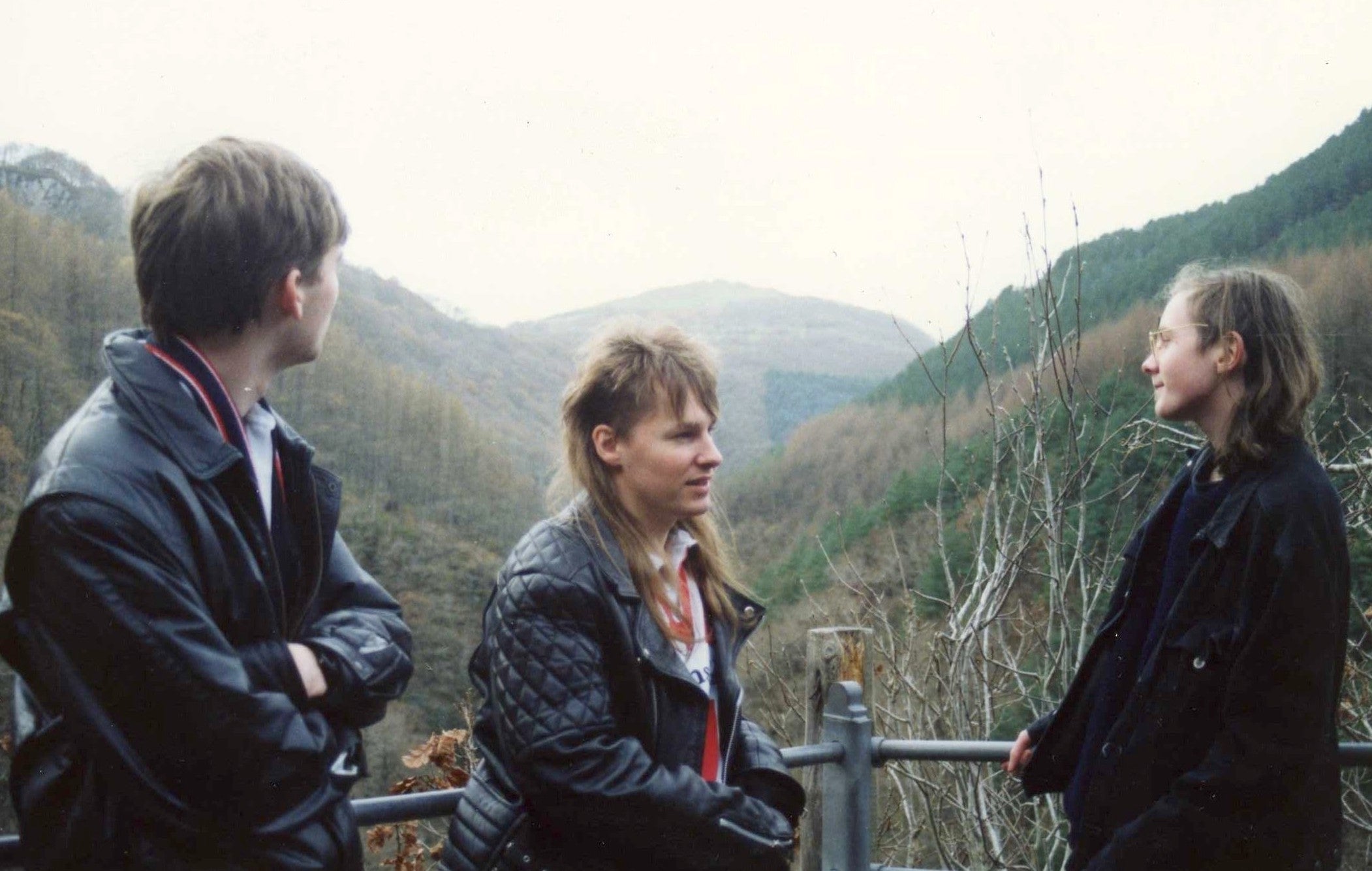
Despite the proliferation of worrying matriarchal insults, a bang-up sense of camaraderie is notwithstanding felt by practically everyone who worked within the walls of EMAP at the time. "It was like college, and feels like family unit today," Davies adds. "Everybody was themselves, no pretensions. We had jobs to do, and it would get serious, but Jaz would e'er hop down the stairs two or iii at a time swinging on the handrail and being super cheery, while Rich would exchange icky noises across the office with Gary." The mutual theme is that despite the insane borderline crunch and often irksome working weather, a job at EMAP was a chance to plough your pastime into gainful employment. "Nosotros had a bully team of people that really got on well, and what you read in the mag was basically an extension of the banter and exchanges that were going on in the function," says Rignall.
"It was liking living in a zany sitcom," adds Lawrence. "I was working with my all-time friends, nerding out over games, pretty much writing whatever I wanted, and almost getting paid for information technology. It was fucking wicked. Right from the start, Mean Machines had always been quite anarchic, only it just kept evolving and improving. Jaz had always encouraged anybody to experiment with words and pictures and stuff, so as new people came on board it simply got better. For me, I was surrounded by these constantly inspiring, hilarious, and passionate people, and they really made me want to raise my game. Nosotros spent pretty much all of our fourth dimension together, in and out of the role - if you lot missed a night in the pub, it was like missing a week of normal homo time. In that location'd be three new running jokes and a radical reappraisal of Atomic Robo Kid to catch up on. All of that fed into the mag, and really contributed to its quality."
Given that the squad at EMAP was, in the early years of the mag, working with equipment that might cause William Caxton to stifle a chuckle, it'due south understandable that the stress regarding the production of each outcome was felt rather keenly past Rignall and his squad. "We had monochrome 286 PCs, just nearly good plenty for playing Prince of Persia and not much else - though I recall that Jaz had a colour screen and a top-stop 386 for gaming," says Leadbetter. "We would blazon up reviews, so Jaz or Paul Glancey - who's now at Criterion as a Senior Designer and Producer - would sub the copy, and so copy and paste it into a package chosen Ventura, which produced the 'galleys' - the text as y'all would run into it on the page. It was then printed on a gigantic, super-expensive light amplification by stimulated emission of radiation printer and given to the artists who would cut out all the text and stick it on a folio, marker information technology up for colour and add the screenshots. Nosotros shot these using a Minolta camera, onto 120mm film. I dimly recall we'd get maybe 15 shots on a roll, and then we'd pop across to a studio in Farringdon Road then get them processed. If you were lucky, you may take seen the odd naked lady."
"Taking screenshots of games is my recollection of ane of my earliest staff writer tasks," says Scotsman Angus 'Gus' Swan, who joined the magazine in 1992. "It was washed in the games room with the assist of a camera, tripod and ripped bit of blackness cloth to drape over the monitor and camera, Victorian lensman-stylee. People were continually walking in to play games and it was a bit shambolic really." Lawrence has similar memories. "The Holy Grail was what we chosen 'perfect suspension', which is when the screen but froze when yous paused the game. A blinking 'pause' sign was adequate. Loads of games would pull up some pointless stat screen or a crappy fleck of artwork, or an unnecessarily ornate 'GAME NOW PAUSED!!!' logo, and your centre would sink. Once you'd got the screenshots developed, they were filed in manus-labelled envelopes in these massive filing cabinets, which you'd have to search through whatever fourth dimension you had to look for a screenshot of an onetime game. And Odin help you if Oz had labelled the envelope. He had a rather idiosyncratic attitude to checking the spellings of titles, so they could have been filed under literally whatever letter of any alphabet."
The process of putting together this 'cut and paste' mode publication might sound painfully old-schoolhouse, but it was far from being the worst example of the menstruum. "Even though our production procedure seems positively Neanderthal these days, it was actually advanced for its time," Rignall says. "When I started at CVG we were using typewriters, typesetters, re-create editing using a red pen - basically doing everything the actually quondam-fashioned way. Hateful Machines was the beginning EMAP mag to essentially be produced using computers and desktop publishing software, and even though the initial outlay for the gear was quite expensive, everything paid for itself within a couple of months. That helped make the magazine very cost-effective, which resulted in it generating a considerable profit, which Lord EMAP very much appreciated."
Lawrence keenly remembers the massive change that occurred when this new engineering was introduced. "When we first got our Macs, we had people come in to train united states of america in how to apply them. When they showed us that yous could practise things like bold text right there on the screen, we freaked out. Information technology was like the chimp-people and the obelisk in 2001: A Space Odyssey, except the chimp-people didn't immediately use the obelisk to sample 30 seconds of William Shatner'south version of 'Mr Tambourine Man' to utilise as an error bulletin." On a more than serious note, Swan feels this new manner of working enriched the publication, and indeed all of EMAP'southward other magazines. "DTP on Macs was really revolutionary at that point," he says. "EMAP was a company that really exploited the opportunity it presented for extremely slick and colourful magazine layouts. Designers went mental - particularly on double-page spreads which are this amazing sheet to present a powerful design idea."
The team allowed their beloved of Japanese design to heavily influence the overall look of the magazine, using publications similar Famitsu equally a resources for artwork and imagery. "Nosotros relied on flyers from the Consumer Electronics Show, books from The Japan Centre shop and a flagrant corruption of copyright when it came to ripping off Japanese magazines, if retentivity serves," says Leadbetter when how Mean Machines sourced much of its official artwork and imagery. Rignall concurs. "Very occasionally nosotros'd get official artwork for the encompass of the magazine, but for the most office it was equally Rich says - we plundered import magazines and books and annihilation else we could get our easily on. We had to be creative, considering well-nigh companies merely didn't have whatsoever illustrative or photographic materials to support their games. If we were lucky, nosotros'd get a boxed copy of a game that we could cut up, but most of the fourth dimension we received pre-production ROM carts that had no supporting media."
The connection with the far-east was strengthened past the mag's intense focus on import software. "What you read in Mean Machines was very much a reflection of our personal interests," reveals Rignall. "During the belatedly 80s and early 90s, many of the very best games were existence fabricated in Japan, and as a event imported games were seriously hot stuff. All I wanted to exercise is write about them and spread the discussion - in one case I'd played them to death, of grade." Review copies were often sourced from Great britain-based independent importers, many of which advertised within the magazine. In these cases, the retailer who supplied the copy would be credited in the review, making it a reciprocal arrangement and thereby ensuring a steady menstruation of new games. "We had a number of favourite importers with great Japanese connections, and we'd regularly call them up or go visit them if they were local, and get games from them fresh off the gunkhole," continues Rignall. "I think an endorsement from united states of america was fairly valuable in helping them institute their brownie equally a quality importer, so we never had any bug getting concur of games in exchange for a mention. The other thing to consider is that a good review from us would help them shift their games, and then it fabricated a lot of sense for them to ensure we had the latest stuff."
Hateful Machines' obsession with Japanese (and to a lesser extent, Northward American) software did throw up some problems, however. The magazine would often encompass titles many months before they were officially released in the UK, which predictably threw the best-laid marketing plans of platform holders and publishers into disarray. "Our coverage definitely caused some friction with Sega and Nintendo," admits Rignall. "They put up with it because we were generating tremendous advanced hype for their games and systems. Ultimately there was zip either company could do almost it anyway; the games and systems existed in the wild, so we covered them - and reader involvement was very high."
A combination of factors - the passion and talent of the team, the burgeoning popularity of games consoles and the arrival of culturally significant titles such as Sonic the Hedgehog, Street Fighter ii and Super Mario Globe - bestowed Hateful Machines with a fearsome commercial momentum, and within 12 months the magazine was challenging its sister publication CVG in terms of circulation. "We were actually quite conservative with our initial Mean Machines impress runs - I think the first consequence was only around 35,000 copies," remembers Rignall. "Fortunately it sold out, so the following month we upped the circulation by a few thousand. Even though we increased the number, demand outstripped supply, and we had a lot of people request newsagents to reserve a copy for them - which fabricated them social club more the following month. That helped Mean Machines really grow quickly as a magazine, and past the end of the kickoff twelvemonth it was selling over 100,000 copies a month. I can't remember the verbal numbers, but in its 2d year, Hateful Machines was the biggest-selling console mag of the catamenia. I think the official circulation peaked at somewhere around 130,000 copies a month, just before it got split into Mean Machines Sega and Nintendo Magazine Arrangement." Purely for reference, Edge magazine sells less than xx,000 copies a month today.
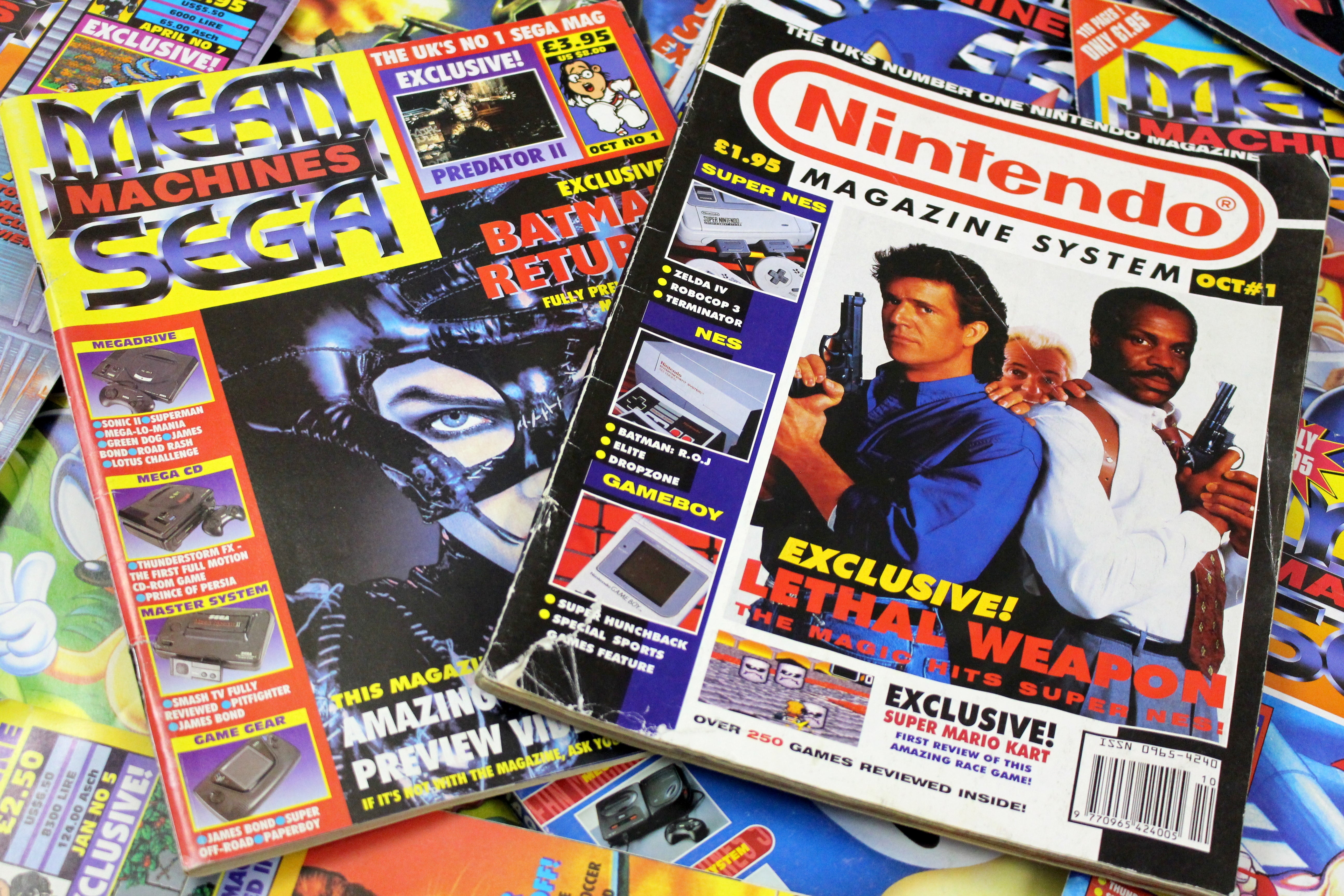
After 24 problems, the decision was fabricated to split Mean Machines down the middle. It was becoming increasingly clear that the ongoing panel war was being fought virtually exclusively between Sega and Nintendo, and while some lucky players owned systems fabricated by both companies, many would just pick a side and defend information technology to the death. With the SNES arriving officially on Great britain shores and the Sega Mega CD also hitting the market, the timing of this schism was ideal. All the same, behind the scenes other events were taking place which made the division even more inevitable. "Once we got the official Nintendo license, it made sense to split Mean Machines into two," explains Rignall. "I remember receiving a fair number of complaints from readers, only the lesser line is that it was a actually good business decision. Both magazines sold incredibly well - Mean Machines Sega sold pretty much the same as the original Mean Machines, and the Nintendo magazine went through the roof - I think the beginning effect sold around 170,000 copies!" Leadbetter is in understanding. "I'm pretty sure the biggest-selling issues were the outset Mean Machines Sega and Nintendo Magazine System issues, considering we gifted the hell out of them with the gratis Sega video and the Nintendo Game Boy keyring - which I strongly suspect was actually a Chinese knock-off."
It was around this time that the team switched from taking photographs of a Goggle box screen to a more than upward-to-date solution - albeit i that wasn't without its own problems. "Nosotros started 'grabbing' screenshots in the worst screen capture software imaginable," says Davies. "We had to take these pics with our olfactory organ while playing the game with our hands. It would crash all the fourth dimension in hot atmospheric condition." Swan goes into a little more than detail. "The screen-grabbing equipment was called Radius and yous passed the console SCART output through information technology. This eliminated the need to process film and immune you lot to hands dispense images in Photoshop. I thought I'd practice something wonderful and capture the entirety of Kakariko Village in The Fable of Zelda: A Link to the Past to be stitched together by the designer. Notwithstanding, the Mac crashed and I lost about fifty unsaved images and an entire afternoon'south work. I cried." While pointing a photographic camera at the screen in a darkened room might seem positively archaic by today'due south standards, Leadbetter feels that the relentless march of technology did have some drawbacks. "Getting dynamic images was much easier with frame-grabbers, but our business at the time was that the images didn't really reflect the style games looked, CRT scanlines and all - something that photography did offer."
While EMAP's money men hailed the fact that its panel arm was now bringing in more than than twice the monthly readership, for many fans the split up marked the end of the 'classic' era of Mean Machines. Both publications were arguably slicker than before and the games they covered were, if anything, even more exciting, but Rignall understands this sentiment to a degree. "Both Mean Machines Sega and Nintendo Mag System were quality mags, but they essentially lost the irreverent, anarchic edge that the original Mean Machines had. New staff members came in and the office vibe changed somewhat, which was reflected in the way we wrote the magazines. It was like changing a ring's members - things merely weren't quite the same."
Entering into an official human relationship with a platform holder also had an affect, of course. "I recall going to multiple meetings where we pitched Nintendo the concept of the mag," says Rignall. "They actually wanted the states to do information technology, but we had to spend a lot of fourth dimension figuring out exactly how it was going to work - the tone and mode of the magazine, and the way that reviews would be washed. In the end they accepted our statement that we needed consummate editorial liberty; any review where we pulled our punches would destroy our credibility and cause the magazine to lose readers. That said, the general tone of NMS was a lot more balmy compared to Mean Machines, and while the team did accept the piss a little, it was done very advisedly to make sure that we didn't say anything as well untoward that might upset people. Nintendo read the mag from cover to cover, and scrutinised every item, so we had to be mindful well-nigh what nosotros said."
Mean Machines Sega lacked official backing, but EMAP would somewhen collaborate with the platform holder on Official Sega Magazine in early 1994; this would morph into Official Sega Saturn Mag - which Leadbetter would edit - at the end of the follow year. "We'd had some back-and-along with Sega about doing an official magazine for years, just they weren't really interested," Rignall says. "I recall one time the official Nintendo mag was established, information technology made sense to Sega to go that route likewise. We had some interesting conversations with both Nintendo and Sega almost keeping the editorial teams very divide and on unlike floors - something that they both felt was incredibly important, for some reason. I don't quite know what they thought we were going to exercise, merely nosotros did make sure each squad was completely independent - I was the only mutual link."
By the time the 32-bit era began in the middle of the '90s, things had changed at EMAP. In 1994 Rignall - the man who had championed the cause of the console and generated millions in revenue for his employer - bid farewell to Priory Court and moved into games development. "While visiting Virgin Interactive Amusement's studios in Southern California in belatedly 1993, I was offered a chore as a design consultant - essentially playing all the games in development and offering review-style feedback to hopefully make them better," he explains. "The opportunity came along at a time when I was a chip fed upwardly with EMAP. I really wanted to launch a new magazine to encompass gaming from a college-stop perspective - information technology would have been similar to Edge, which came out a few months later - merely it was turned downwardly by CVG's publisher in favour of an ill-fated howdy-fi and home amusement publication that failed after only a few problems. That made my decision to leave EMAP a lilliputian easier, and I left the UK for us in very early 1994." To brand matters worse, the publisher began making some questionable calls with regards to its existing magazines in the hope that it could claim even more than market place share in an increasingly competitive sector. "EMAP was focused on the success of FHM and tried to scroll out that success into its games magazines which were and so supposed to exist brands," laments Leadbetter. "At this bespeak, management were embarrassed by the products and the people that made them millions, and went down a unlike route."

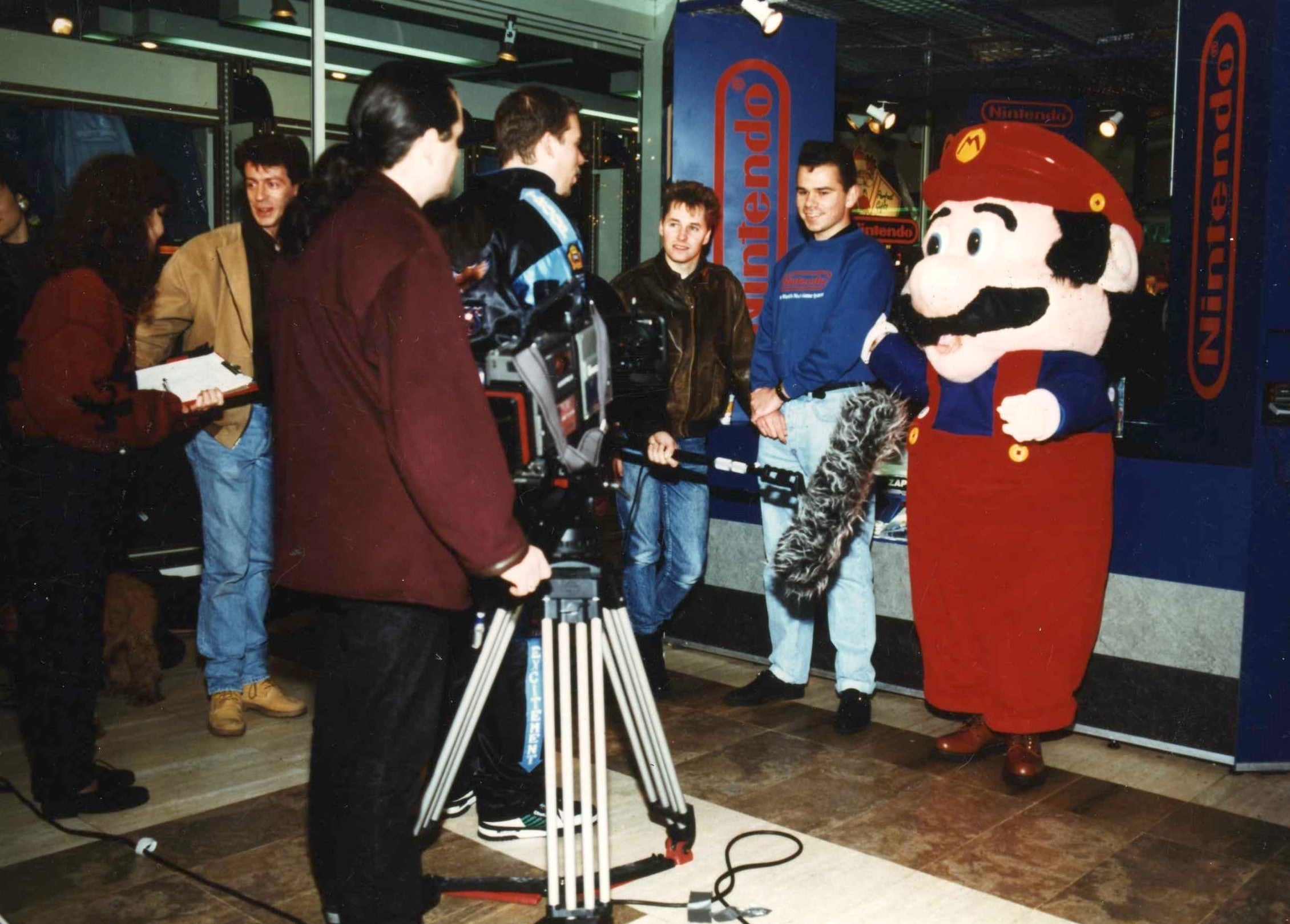
"The publishers started assertive their own hype," Lawrence adds. "Basically, the success of the mags meant Lord EMAP started getting the attending of One thousand Moff EMAP at the Majestic Court Of EMAP, and things started getting a lot more corporate. I recollect one year they held a lavish Mean Machines party at the ECTS that the staff weren't allowed to attend, because they were worried nosotros'd drink all the booze and scare off the advertisers (although, in retrospect, that was a fair assessment). Ultimately, the fatcat breadheads didn't understand the cyclical nature of the business. Once we hit about 150,000 bug a month and the team were appearing on television receiver, they assumed things were going to be like that forever, whereas I call up the team had a scrap more of a realistic understanding of things. So a couple of years later, when the consoles starting ageing and the apportionment started to normalise, the management assumed nosotros were suddenly doing something wrong, and started putting more pressure on us. The atmosphere changed for the worse."
While Nintendo Magazine System soldiered on under the somewhat snappier moniker Nintendo Mag, Mean Machines Sega was eventually culled in 1997, judged as surplus to requirements alongside the aforementioned Official Sega Saturn magazine. The Mean Machines name lived on in the class of Mean Machines PlayStation, just information technology lasted simply a scattering of issues before the plug was unceremoniously pulled. "It was combination of factors really," says Leadbetter when asked why the final magazine to acquit the Mean Machines name flopped so badly. "First of all, Mean Machines worked because it brought in raw enthusiast talent and Jaz knew how to shape that into a team. I don't actually think much about Hateful Machines PlayStation but I dimly recall that EMAP tapped into existing, established staff to exercise it. I too think it was aimed at a 'demographic'. At this point, EMAP was starting to endeavour to practise things more than professionally and lost the enthusiast and fanzine-style border considering of information technology."
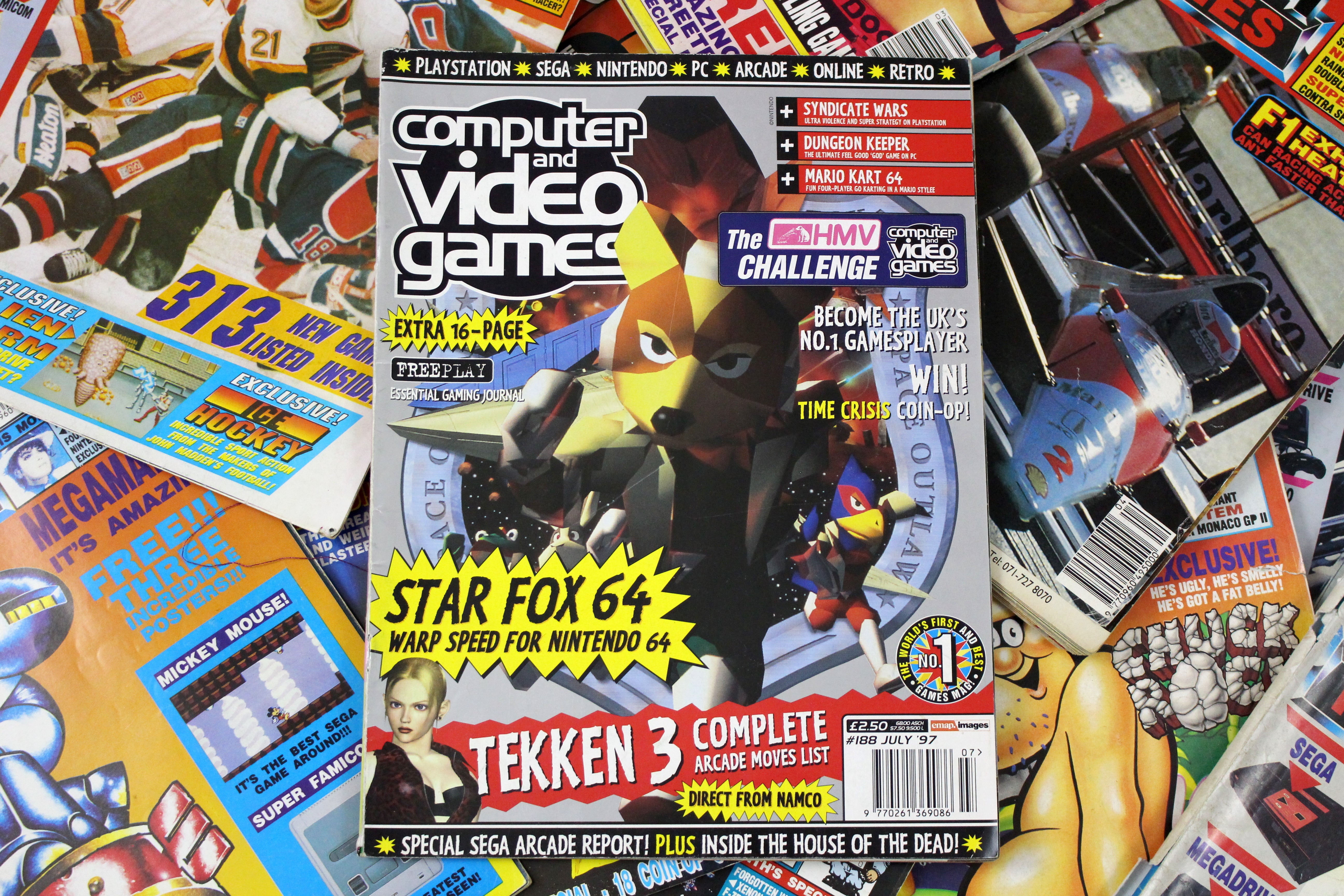
While the brand was retired, the spirit of Mean Machines ironically lived on in CVG, which by this bespeak was enjoying a much-deserved resurgence thanks to the efforts of Paul Davies, who had left his position as Deputy Editor at Nintendo Mag to take the reins on what was, at the time, a fading publication. Davies steadied the ship and transformed CVG into a magazine which took inspiration from EMAP's past glories.
"Mean Machines was more a magazine that nosotros wanted to emulate, it was a formula built effectually the personalities as much as the presentation," he explains. "Tom Guise and I were devoted fans of Hateful Machines, we shared the aforementioned view and were then much on the same page that we almost didn't need to spell it out for each other. And the guys we sought to bring on board fitted that profile exactly. Nosotros loved how Hateful Machines took a chance on the legend that was Radion Automatic and nosotros hired Ed Lomas for similar reasons. He was a prodigious talent in our view and as well a bit crazy, which was perfect. We required that the design team got to grips with the games as well, with Jaime Smith profoundly contributing to the clarity of layout, while Tom Cox had a cracking humor to match talent. CVG became very console-oriented - nosotros completely ditched Amiga and ST games, although we cherry-red-picked great PC titles, such as Quake and Half-Life. We also wanted to be as close every bit possible to our audience. The concept of Hateful Yob was brilliant, and we wanted to share our passion on the letters pages in the aforementioned mode that Jaz did in his Q&A, where he gave his opinion and boasted nigh things he might've seen but couldn't talk about withal. Finally, we looked up to Jaz, Rich, Gary, Rob, Rad and Oz as the way we should exist every bit professionals, which in some cases wasn't very grown up, only in terms of getting the job done so that the mag shone, we borrowed all of that from the Hateful Machines team." Former Mean Machines fine art editor Oz Browne would even join the new-look CVG for a short while before moving onto Titan Books, further cementing the connection between the two.
The fortunes of CVG during this period are worthy of a characteristic of its own; suffice to say, the hard graft of Davies and his squad paid off handsomely and attracted a loyal and committed audience, selling around 80,000 copies at its pinnacle - a hit accomplishment at a time when the growth of net use was offset to eat away at magazine circulations. During this fourth dimension EMAP moved offices from Priory Court to the more swanky London Docklands, severing a huge historical connectedness with the hugely successful Rignall era. Afterward a few years of success EMAP decided CVG should abandon its hardcore focus and aim for the mainstream audience to secure bigger sales. The team splintered, Davies was relegated to staff writer and Matt Howell - who had previously helmed a motorcycle mag - was drafted in equally editor. To the surprise of absolutely no ane the ploy failed and CVG hemorrhaged readers, somewhen dwindling to the point that it was offloaded to Dennis Publishing. Dennis afterward sold the brand onto Future Publishing, which turned the UK's longest-running video games magazine into a website before closing it entirely in 2015 and retiring the proper name. EMAP's bargain with Nintendo would last until 2006 when Future won the licence and relaunched the magazine - consummate with Rignall's old Newsfield cohort Steve Jarratt at the helm - as Official Nintendo Magazine. In 2008, Bauer Media Grouping purchased EMAP Consumer Media and EMAP Radio for £1.14bn. What remains of EMAP'southward business-to-business publishing and events arm is at present known as Ascential, while the EMAP name was formally retired in 2015 following the decision to move to digital-simply publishing.

While there have been rumours of some kind of revival in the past, it seems that Hateful Machines will forever exist a part of history. "Outside of YouTube, I don't retrieve any media outlet enjoys the same affinity with its readers equally Mean Machines did at the time," says Davies. "When I joined the team, I fitted in considering I knew what they liked since it was what I liked also. We were hired to contribute to a squad, not to fulfil a role. Mean Machines and CVG were allowed to be run like little gangs with very little interference from the publishers." An online revival would arguably make the most sense, merely Rignall - whose career has seen him hold senior roles at IGN, Future United states of america, Walmart.com, Depository financial institution of America, GamePro and more recently Eurogamer sister site United states of america Gamer, where he currently holds the title Editor-at-Large - feels that the sensitive nature of the internet would rob a resurrected Mean Machines of its anarchic edge. "If it was a full-on daily site with the kind of hyperbolic opinions, piss-taking, and irreverent humor that underpinned Mean Machines, it would likely cause controversy and drama these days, especially on social media. I'm sure some people would love information technology, just I tin imagine others beingness offended past the jokes, or non understanding them, and fans of the games we made fun of becoming deeply upset. That said, I call back Mean Machines might work equally a podcast, where I remember there'south a little more elbowroom to have a bit of fun - but even then, some people might get pissed off."
While many of the staff involved have gone on to forge successful careers both within and exterior the games industry, Leadbetter feels that the Mean Machines squad - and the wider stable of talent at EMAP - were somewhat exploited. "Looking back, nosotros should have left EMAP, washed our own thing and taken control of our destinies," he muses. "Instead, we ended up with fuck-all and EMAP literally coined information technology in. I remember a few issues into Hateful Machines Sega, we'd put out a really poor embrace - Fatal Fury, I think - and sold maybe 10 percent less than the preceding month. Afterwards on, I heard the publisher mumble something well-nigh mayhap but making a million quid turn a profit that year considering of it. Simply!" Lawrence'south regrets are a lilliputian less dramatic. "I regret trying to exist cool when Chris Evans rang me when I was on 'Judge The Grudge' on The Large Breakfast, and coming across like a massive bell-end. Not starting a record label and signing MC'south Nick & Steve (of "Do Me A Favour Mastermix 'xc fame); those boys would have been my retirement fund. Not really paying attending to what Eddie Vedder said to me and Jaz later we saw Pearl Jam play Southend Esplanade; turns out they got quite popular after that. Sharing a sleeping room wall with Gary Harrod. Camera phones not having been invented when Dexter Fletcher got thrown out of the SNES Street Fighter two launch - that he was hosting - at HMV."
"I regret not having a inkling about career, and trusting that hard piece of work and a true love for games would keep me in employment until I retired at lx," says Davies after a prolonged break. "If I don't say at present that I loved everybody that I worked with, even when nosotros were grouse over nothing, I would regret that, too. You lot take to believe that it was a special place and fourth dimension."
Source: https://www.eurogamer.net/the-story-of-mean-machines-magazine
0 Response to "Who Did the Art Work for Hardcore Computing Magazine"
Post a Comment